


5 Reasons Your Numbers Still Jump On Metformin (And The One Leaf Nobody Mentions)

READ THIS BEFORE your next appointment — especially if the conversation keeps circling back to raising your dose.
You take it twice a day. You cut the bread. You did everything they told you.
And your readings still jump after meals you thought were fine.
You've stopped mentioning it, because the answer is always the same. Try harder. Or take more.
It isn't that you're doing it wrong.
It's that the fastest way sugar gets into your blood is the one thing nothing you've been given actually works on.
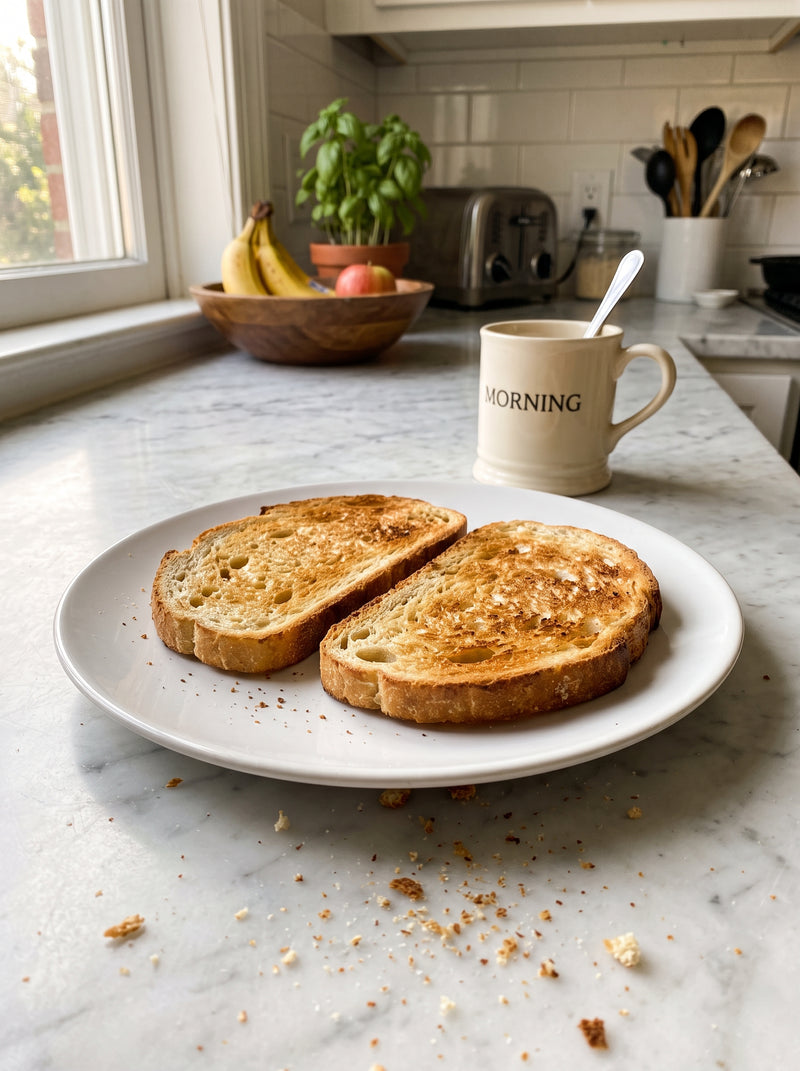
Reason 1: The Problem Was Never The Bread. It's How Fast Your Body Turns It Into Sugar.
Every option you've been offered comes down to the same two.
Eat the carbs and spike. Or give them up.
You tried giving them up. Everyone does. Nobody sustains it.
But that slice of bread doesn't enter your blood as bread.
Your body has to break it down into sugar first.
Break it down fast — everything floods in at once. That's the spike.
Break it down slow — the same slice releases gently over an hour. No flood.
Same bread. Same amount. Completely different reading.
Giving up the food was never the only option.
Slowing down what your body does to it is the one nobody mentioned.
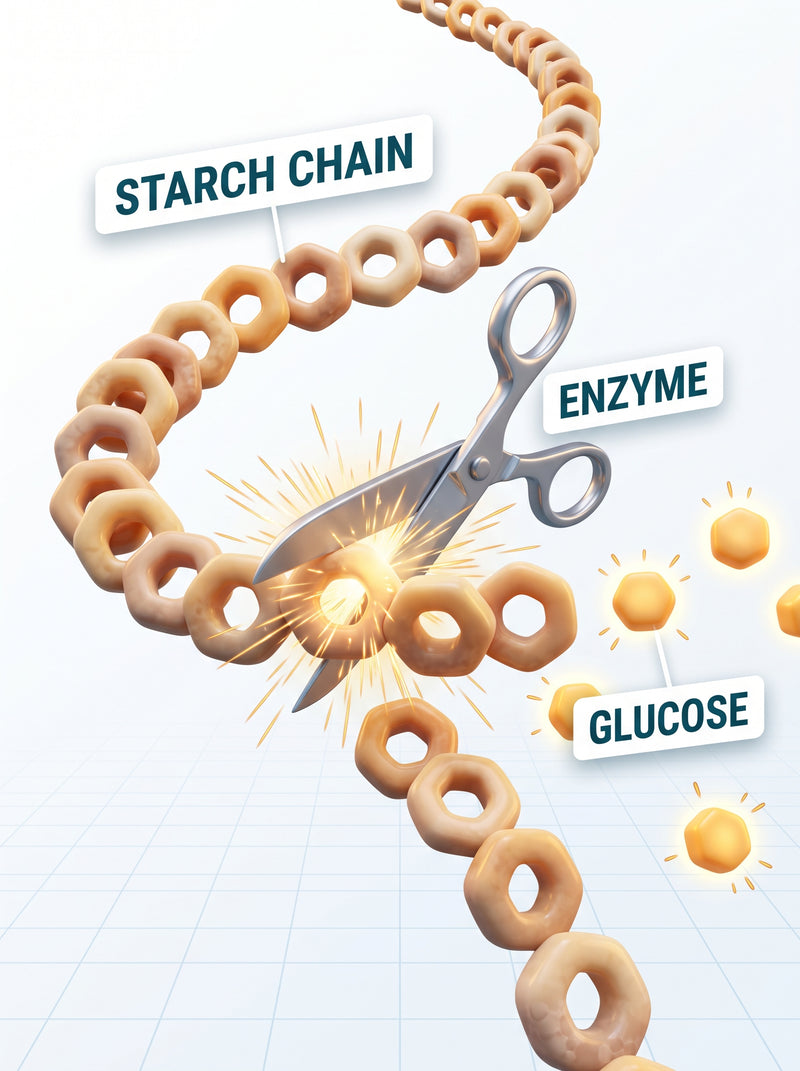
Reason 2: There Are Scissors In Your Gut, And Yours Are Working Too Fast
Bread, pasta, potatoes, cereal — they're all the same thing underneath. Starch.
And starch isn't sugar yet. Your body has to make it into sugar.
It does that with two enzymes. Think of them as scissors.
They cut long starch chains into single sugar molecules small enough to pass into your bloodstream.
Those scissors set the speed.
Cut fast, and a meal's worth of sugar arrives all at once. Cut slow, and the same meal trickles in over an hour.
Nobody has ever measured yours. Nobody has ever mentioned them.
And after decades of starch-heavy meals, they've been running wide open the entire time.
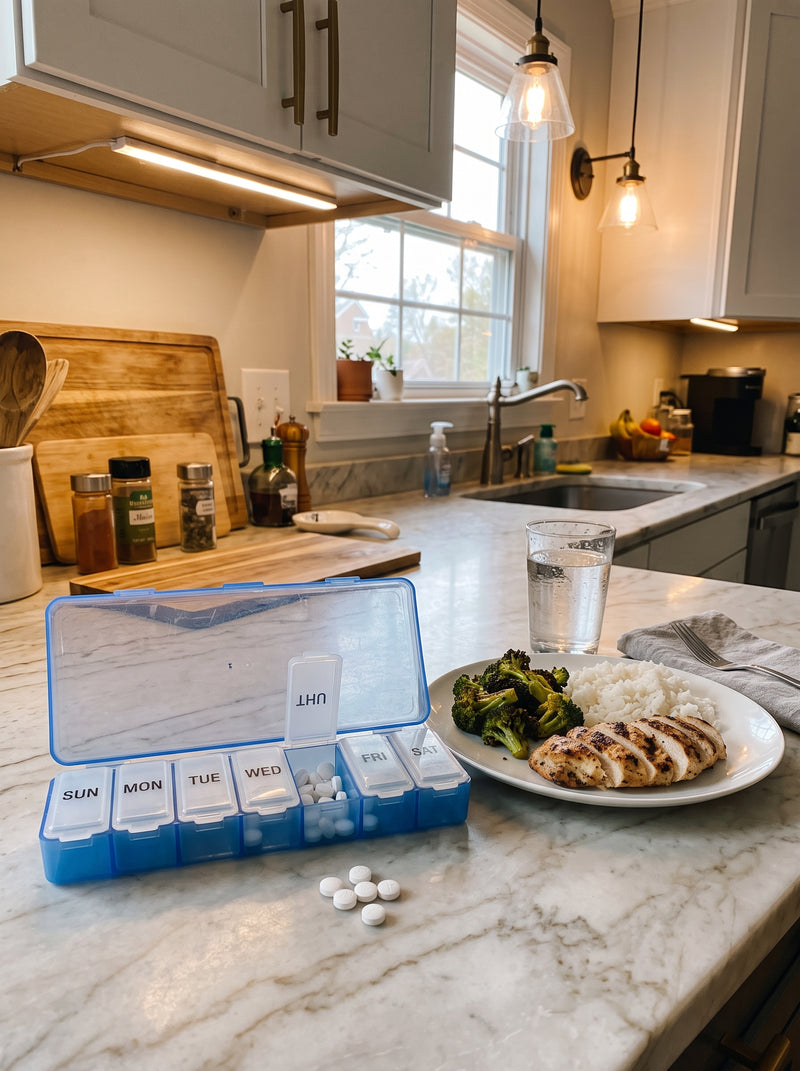
Reason 3: Metformin Was Never Designed To Touch This
Here's what your pill actually does.
Metformin works on your liver. It tells it to stop dumping stored glucose into your blood, and it helps your cells respond better to insulin.
It does that job well. That's why you're on it.
But read it again. Your liver.
Metformin does not touch your digestion. Not the enzymes. Not the scissors. Not the speed.
The bread you eat tonight will break down at exactly the same rate it did the night before your very first prescription.
That's the gap. Your medication handles the sugar your body releases from storage. Nothing handles the sugar coming in through your fork.
So the readings still jump after meals. And when they jump, the answer is more medication — because the other half of the problem was never on the table.
Here's the part that should genuinely annoy you.
There is a drug class built for exactly this. Alpha-glucosidase inhibitors — they slow those enzymes down. They exist. They've existed for thirty years.
They're just rarely prescribed in the US, because the side effects are unpleasant enough that most doctors skip straight to something else.
So the mechanism is real and medicine knows it works.
You were simply never offered anything that does it.
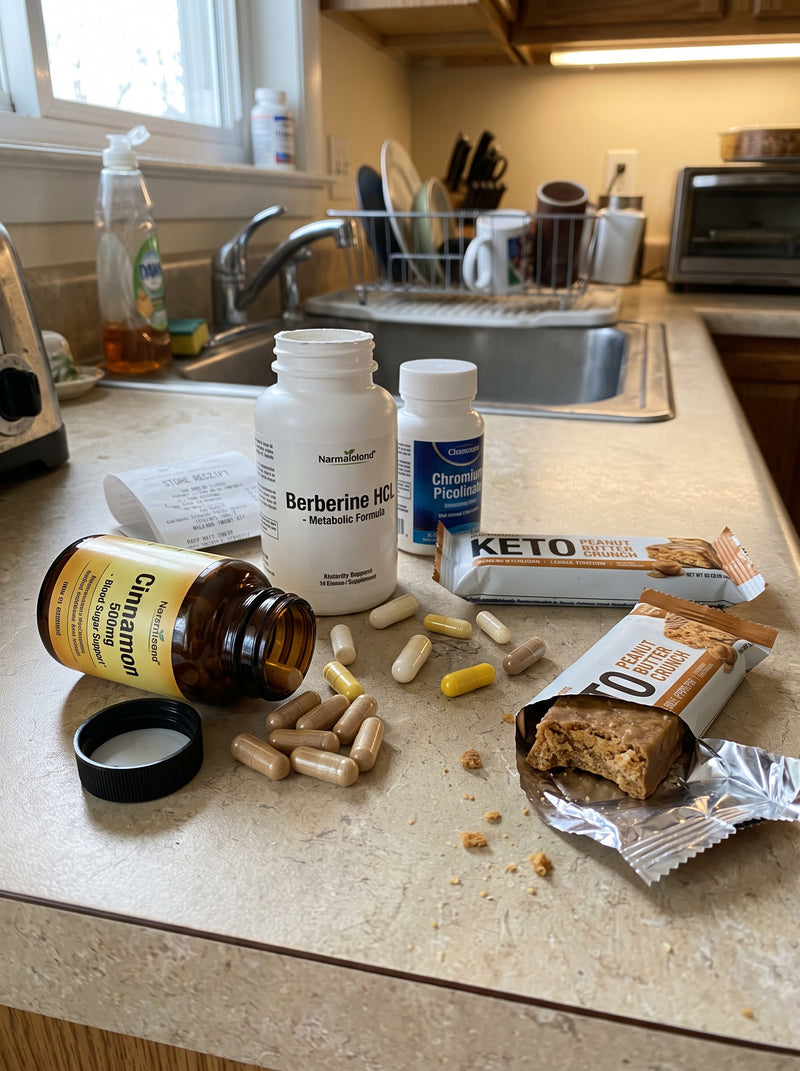
Reason 4: Everything Else You've Tried Arrives Too Late
Look at when each one shows up.
Cinnamon capsules. Almost all of them are cassia — the cheap kind. Studies used one to six grams a day. Your capsule holds 500mg. And cassia carries coumarin, which your liver processes every day you take it.
Berberine. Works on how your cells respond to insulin — after the sugar is already in your blood. Four-hour half-life, so it needs three doses a day, and the stomach cramping is why most people quit inside a month.
Chromium. Trace mineral. Small trials, inconsistent results. Even supplement-friendly reviews call it thin.
Cutting carbs. The only one that acts early — by deleting the food. Which is why nobody sustains it past a year.
Exercise. Genuinely helps, and your doctor is right to push it. But a walk after dinner does nothing about the twenty minutes when the sugar is actually arriving.
Every one of them shows up after the flood, and tries to clean it up.
Not one of them slows the scissors.
Reason 5: The One Thing That Does Is A Leaf The West Throws Away
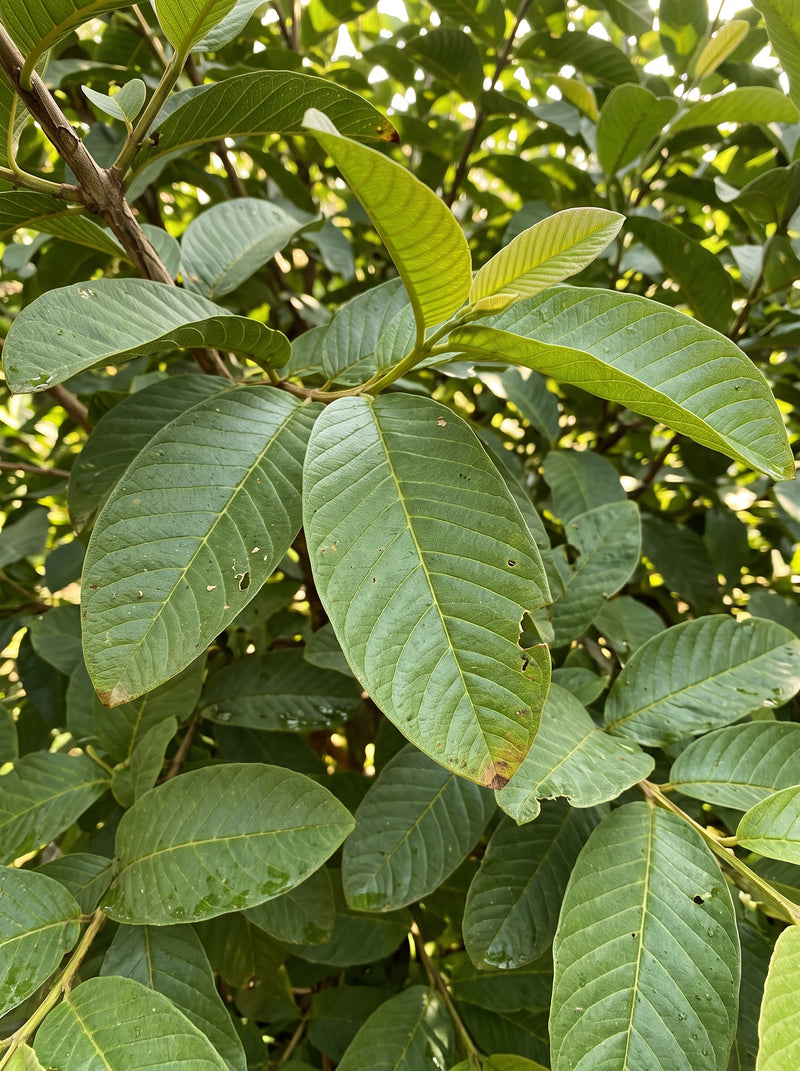
Everyone knows guava. It's in your supermarket right now — juice, jam, candy.
Almost nobody knows about the leaf.
But in Mexico, Brazil, India and the Philippines, the leaf is what people actually brewed. Not the fruit. For centuries. On different continents, independently, all landing on the same plant.
They didn't know the mechanism.
Modern research does: guava leaf polyphenols slow the exact enzymes that cut starch into sugar.
The same target that drug class was built for. Without the prescription.
They slow the scissors.
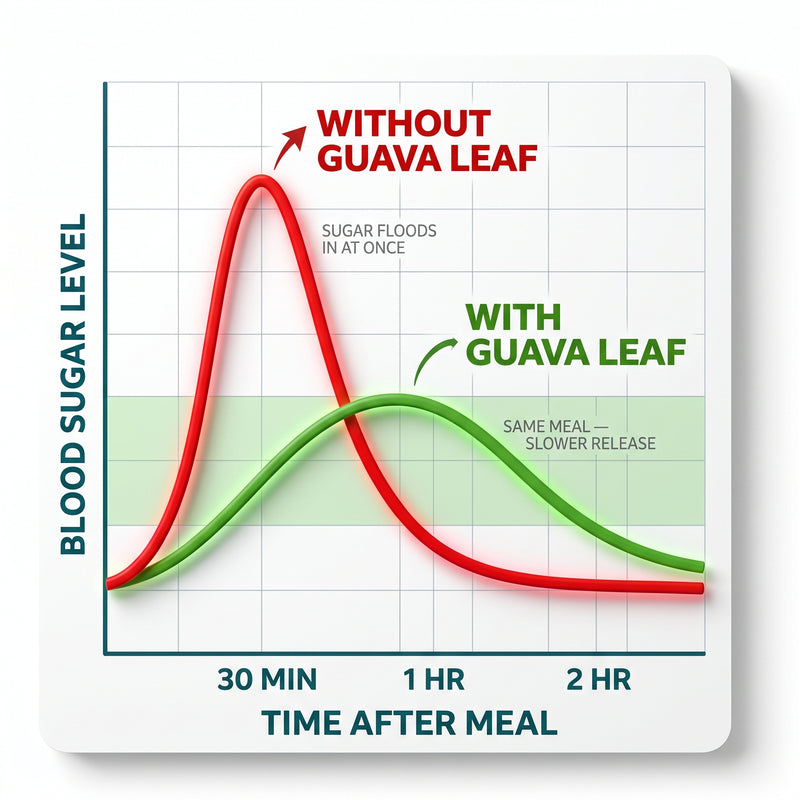
This isn't fringe wellness. Japan's health authority approved guava leaf tea as a Food for Specified Health Use for post-meal blood sugar — a government-level designation almost no botanical on earth has earned.
Meanwhile the West spent thirty years selling you the fruit's vitamin C.
And composting the part that did the work.
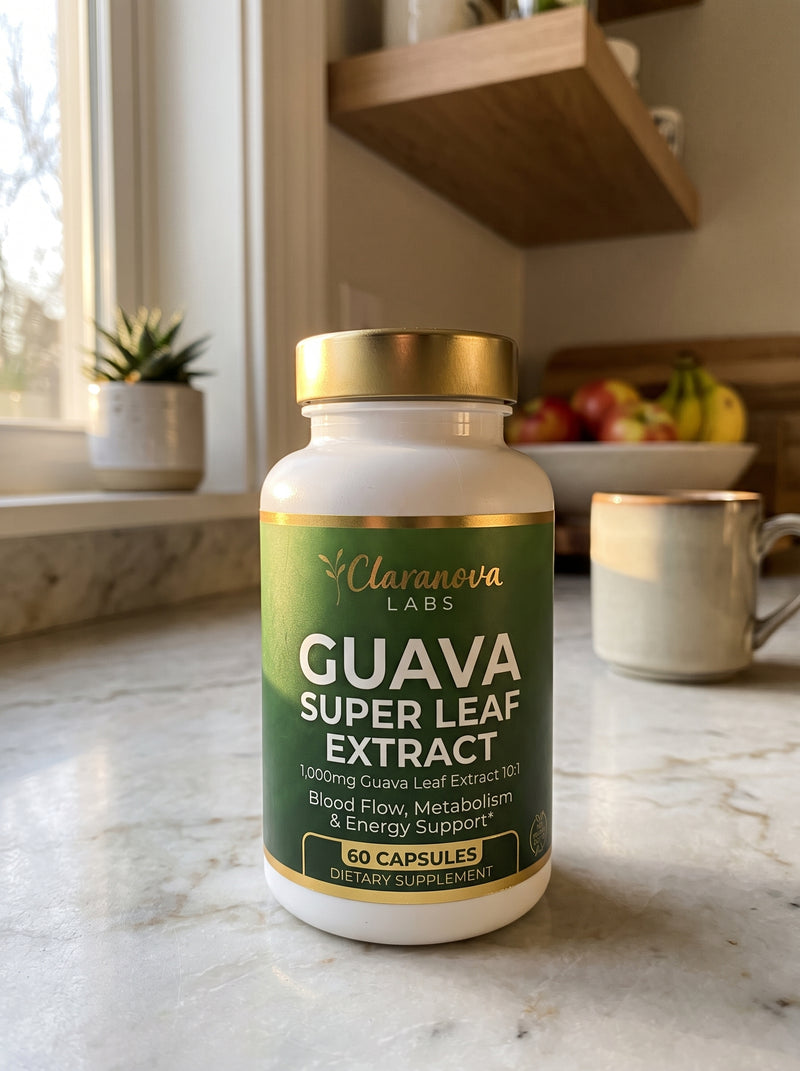
A company called Claranova Labs recently made a clinical-strength guava leaf extract available in capsule form.
1,000 milligrams of whole leaf extract. A 10:1 concentrate — ten kilograms of leaf reduced into one.
Standardized for polyphenols, so every capsule carries the same active load.
Two capsules with your largest meal.
No proprietary blend. No stimulants. No filler.
Just the part of the plant the world has been discarding.
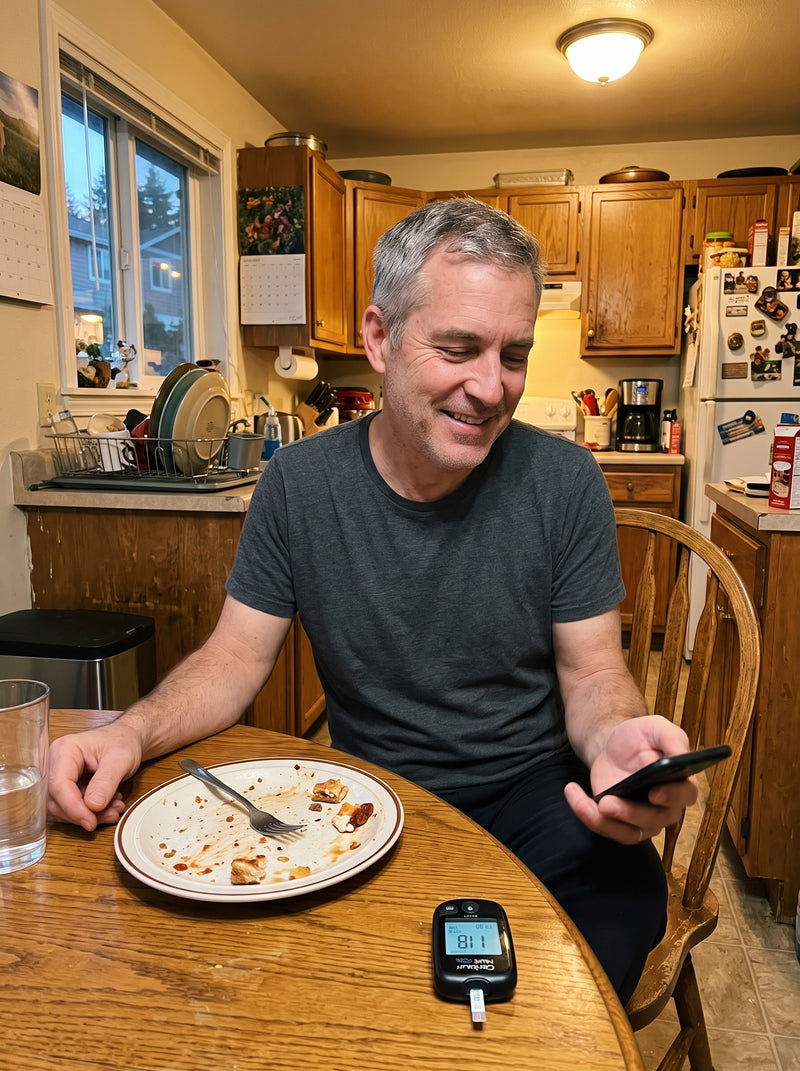
"Four years on metformin and what always got me was how much my readings still swung after dinner. I asked my doctor before starting this and he said there was no reason not to run it alongside. Best conversation I've had in that office in years."
— Ray, 51

"I did keto on top of the medication for eight months. Hated every day, and the second I stopped it all came back. I eat pasta with my family again. That's the part I still can't believe."
— Priya, 48

"The afternoon crashes went first — about ten days. My wife noticed I stopped falling asleep on the couch after dinner. I'm still on everything my doctor put me on. This just sits alongside it."
— Dale, 57
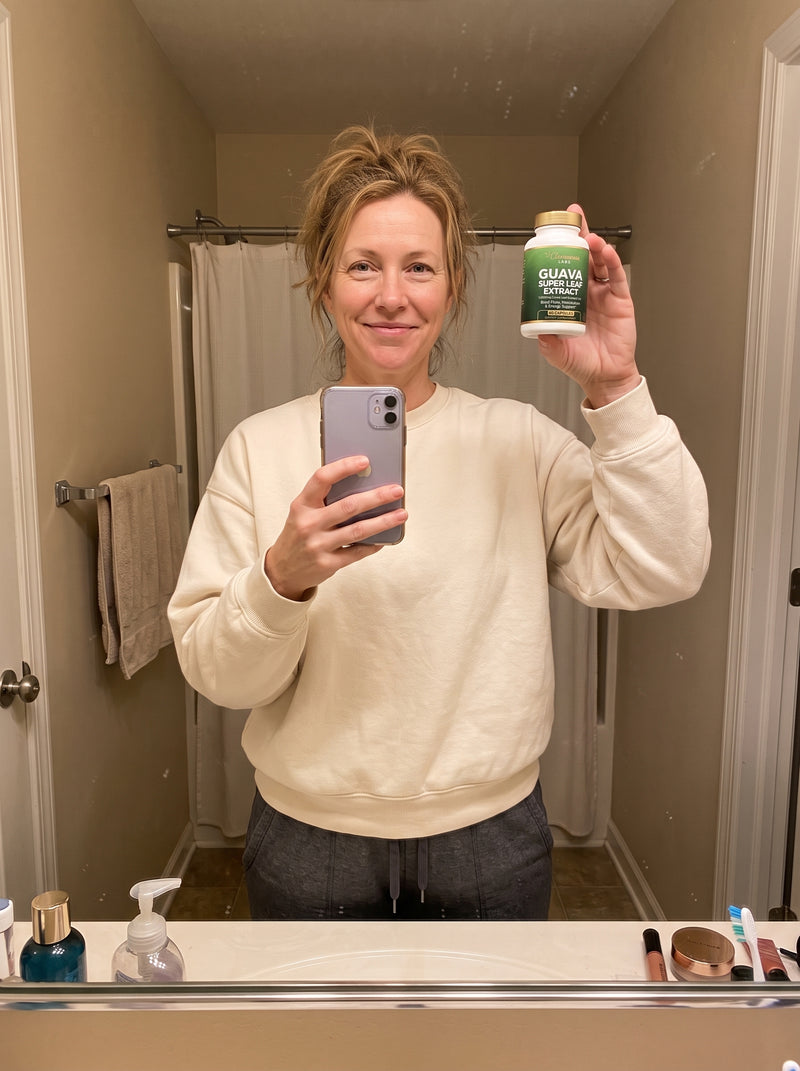
Here's what your first thirty days can look like.
Day one. Two capsules with your biggest meal. Nothing dramatic. But you get through the evening without the heavy, foggy feeling that usually follows dinner. You'll assume it was a coincidence. It wasn't.
Day seven. The afternoon crash stops arriving. You finish lunch and go back to work the way you did years ago. No second coffee. No fighting off a nap at your desk.
Day fourteen. The 9pm snack stops happening. You're not resisting the urge to raid the kitchen — the urge doesn't show up. You notice three days later that it's gone.
Day thirty. Your waistband sits differently. Your energy holds level morning to evening. And for the first time in years, you're not quietly dreading the next appointment.
That's the part nobody prepares you for. Not the number. The relief.
The low-grade dread sitting behind every checkup — it quiets down.
And Claranova Labs backs it with a 60-day money-back guarantee. If nothing changes, you get a full refund.
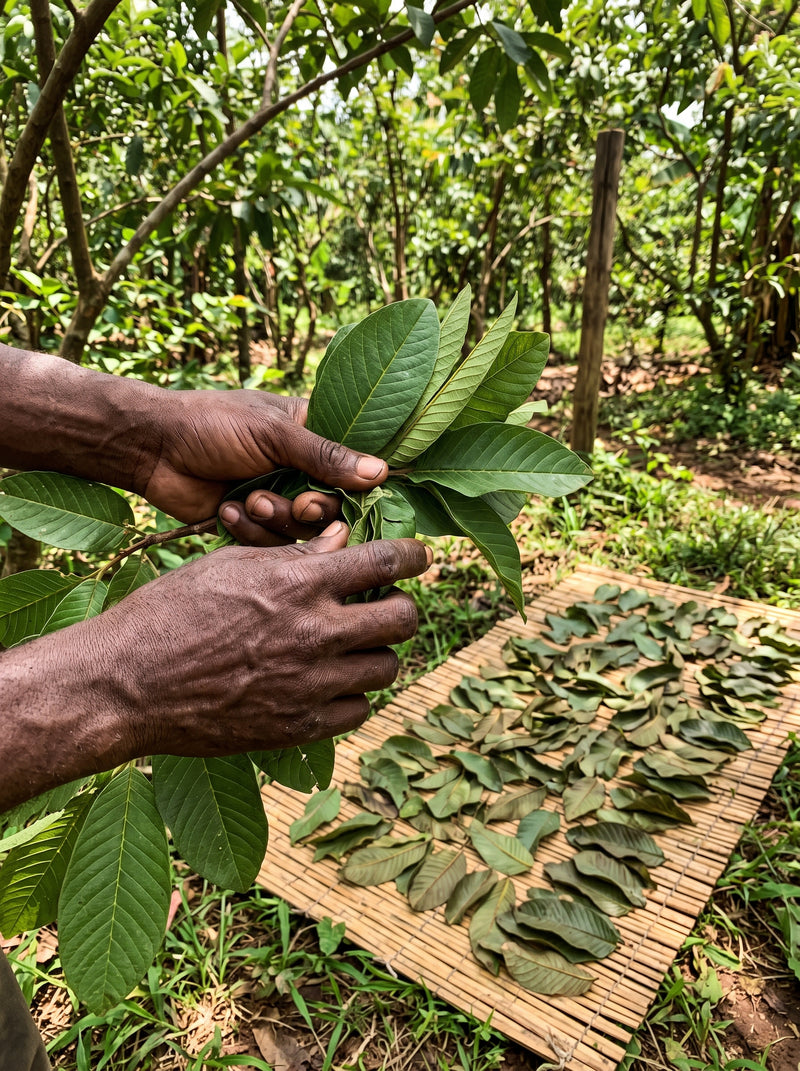
Guava leaf can't be synthesized in a lab.
It has to be harvested, dried, and concentrated at a 10:1 ratio — ten times the raw material of the cheap powders sold online as "guava extract."
Most of what's out there is fruit powder. Vitamin C with a nice label.
Claranova Labs produces in limited batches. Each is third-party tested before it ships. When a batch sells out, restocking takes weeks.
Claranova Labs Guava.
60 capsules per bottle.
Full 30-day supply.
60-day money-back guarantee.
Works alongside what your doctor already has you on. Nothing to stop. Nothing to replace. Nothing to explain at your next appointment except that you added a leaf.
If nothing changes, you don't pay.
Check Availability Below.

TRY GUAVA NOW (60-Day Money-Back Guarantee)
Support the half of the problem your medication was never built for — with clinical-strength 10:1 whole guava leaf extract, standardized for polyphenols.
CHECK AVAILABILITY60-Day Money-Back Guarantee